
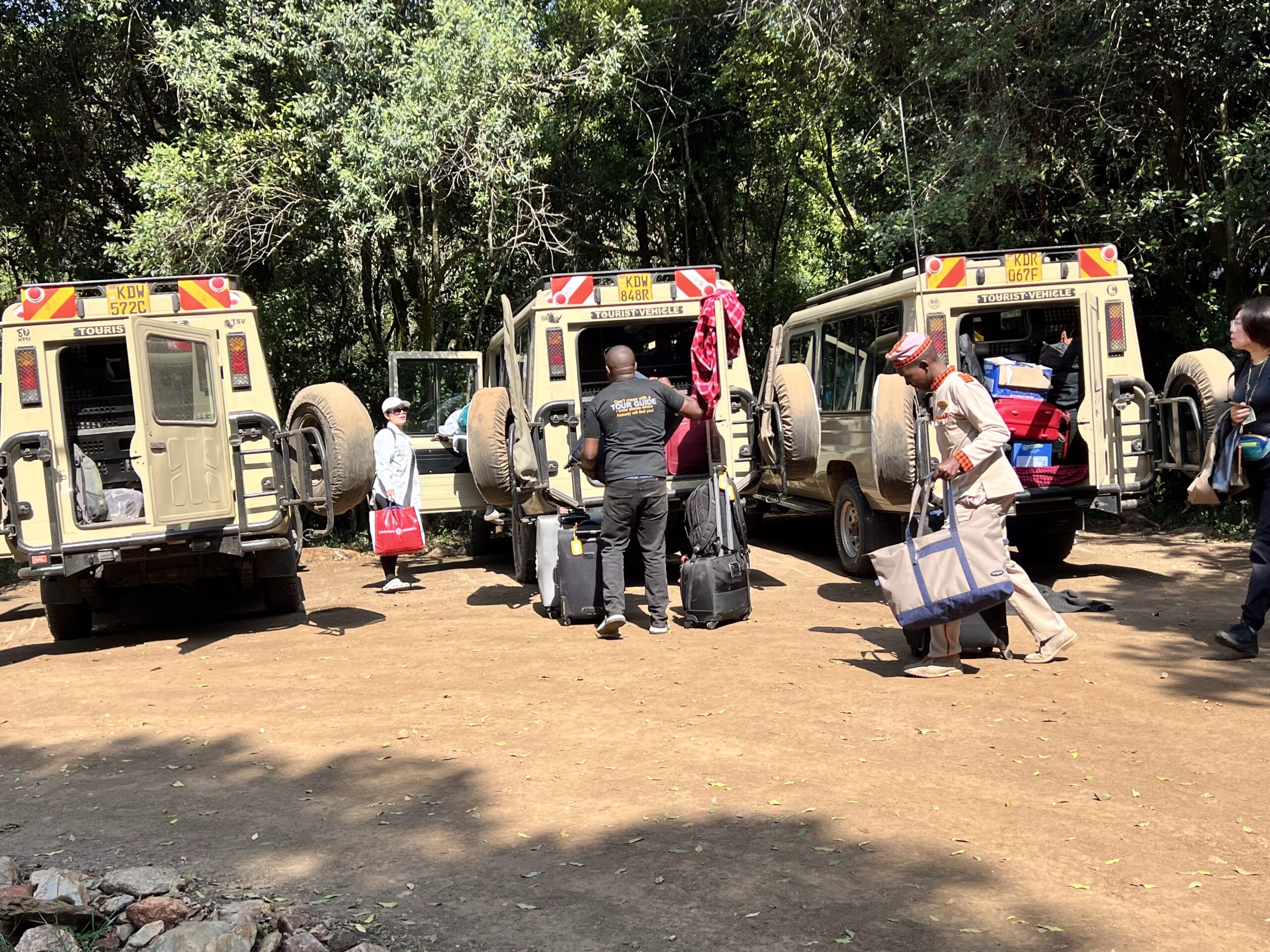
If you have been told that your Kenya safari is booked on a “transport-only” basis, you may be wondering what that actually means.
Does it mean you simply get a vehicle?
Does the driver take you into the national parks?
Who pays the driver’s accommodation? What about fuel and park fees? If you have booked your lodges directly, who is responsible for making sure everything works together?
These are important questions because transport-only safari does not mean the same thing as booking a complete safari package.
Having worked in the Kenyan safari industry for more than 15 years, I have seen how easily misunderstandings can arise when the responsibilities of the transport company, traveller and accommodation provider are not clearly understood before departure.
At Vanvic Safari Transport, our approach is simple: compare notes before the safari begins, make sure everyone understands the arrangement, provide a properly maintained safari vehicle and experienced driver, and remain available throughout the journey.
This guide explains exactly how transport-only safari arrangements work in Kenya and what you should check before you travel.
What Does “Transport-Only Safari” Mean?
A transport-only safari means that you have arranged transport for your safari independently of your accommodation and other safari arrangements.
For example, you may have booked:
- Your own lodges and camps
- Your own flights
- Meals directly with the accommodation
- Activities directly with the lodges
- Park or conservation arrangements separately
You then hire a professional safari transport company to provide the vehicle and driver for your itinerary.
In our case, a transport-only arrangement can cover the vehicle, fuel, driver’s allowance, driver’s accommodation and applicable park fees for the vehicle and driver, according to the agreed quotation and itinerary.
The accommodation, meanwhile, may have been booked directly by the travellers.
This is an important distinction.
The transport company is not automatically responsible for accommodation simply because the vehicle is taking you there.
What Is Normally Included in Transport-Only Safari?
Every company has its own terms, so never assume that “transport-only” includes the same things everywhere.
Ask for the inclusions in writing before you pay.
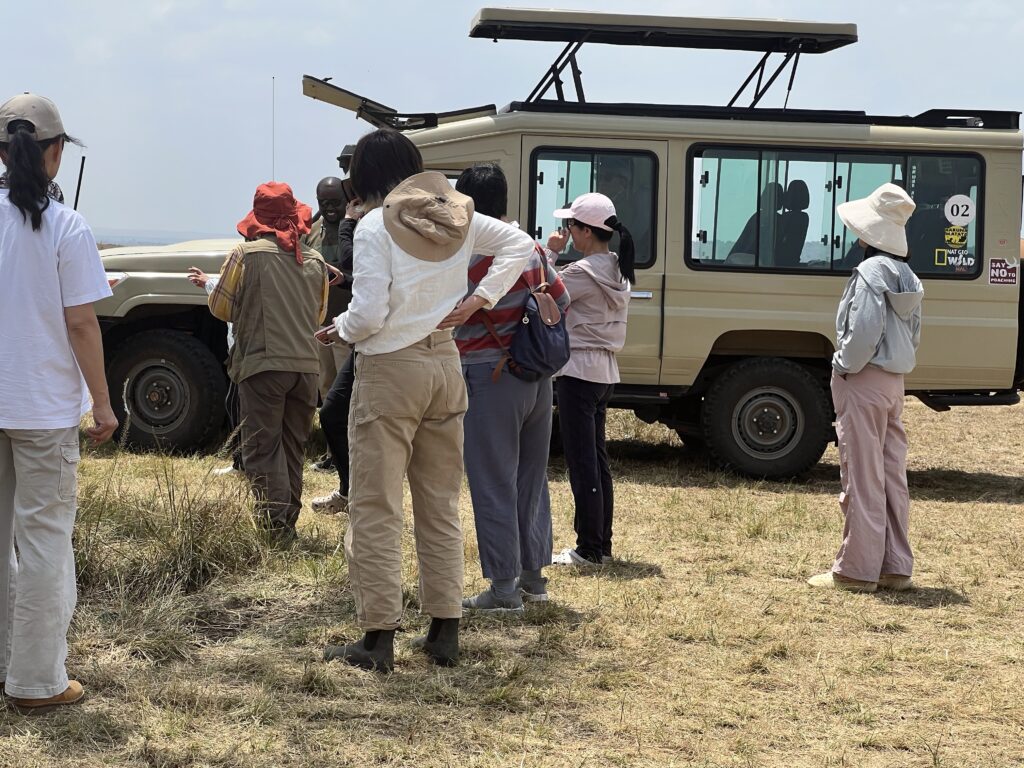
With our transport arrangements, the agreed package can include:
- Safari vehicle
The vehicle should be clearly specified before the safari.
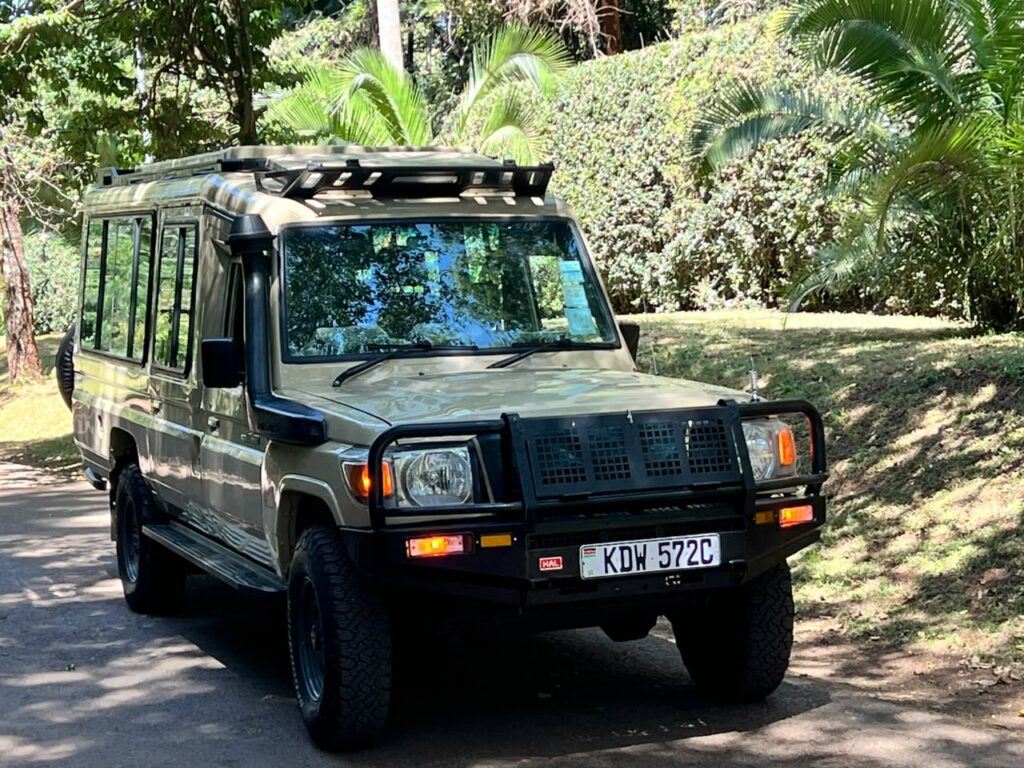
If you have requested a 4×4 Toyota Land Cruiser, confirm that this is actually what will be provided.
This matters particularly in Kenya because there is a significant difference between a dedicated safari 4×4 and an ordinary road vehicle.
A safari itinerary can involve rough tracks, uneven terrain, long distances and national park roads.
At Vanvic Safari Transport, we are selective about the vehicles we use. We want properly maintained safari vehicles that are suitable for the job.
- Fuel
Fuel is an important cost to clarify.
A quotation that looks inexpensive at first can become very different if fuel is later added as an extra.
Always ask:
“Is fuel included in the quoted transport rate?”
- Driver’s allowance
The driver’s allowance should also be clearly stated.
Do not assume that the driver-related costs are automatically included.
Ask whether the quoted price covers the driver’s allowance throughout the itinerary.
- Driver’s accommodation
If your safari involves several nights away from Nairobi, the driver will need accommodation.
This should be discussed before departure.
Otherwise, a traveller can arrive at a remote lodge and suddenly discover that there is an additional driver accommodation charge.
- Applicable park fees for the vehicle and driver
This is another area where misunderstandings can occur.
Ask specifically whether the quotation includes the park fees applicable to the vehicle and driver, and understand which guest/conservation fees remain your responsibility.
The key is not to assume.
Get the exact inclusions written into your transport agreement.
Who Is the Driver on a Transport-Only Safari?
One of the biggest misconceptions is that a transport-only driver is simply someone who drives from Point A to Point B.
That is not necessarily the case.
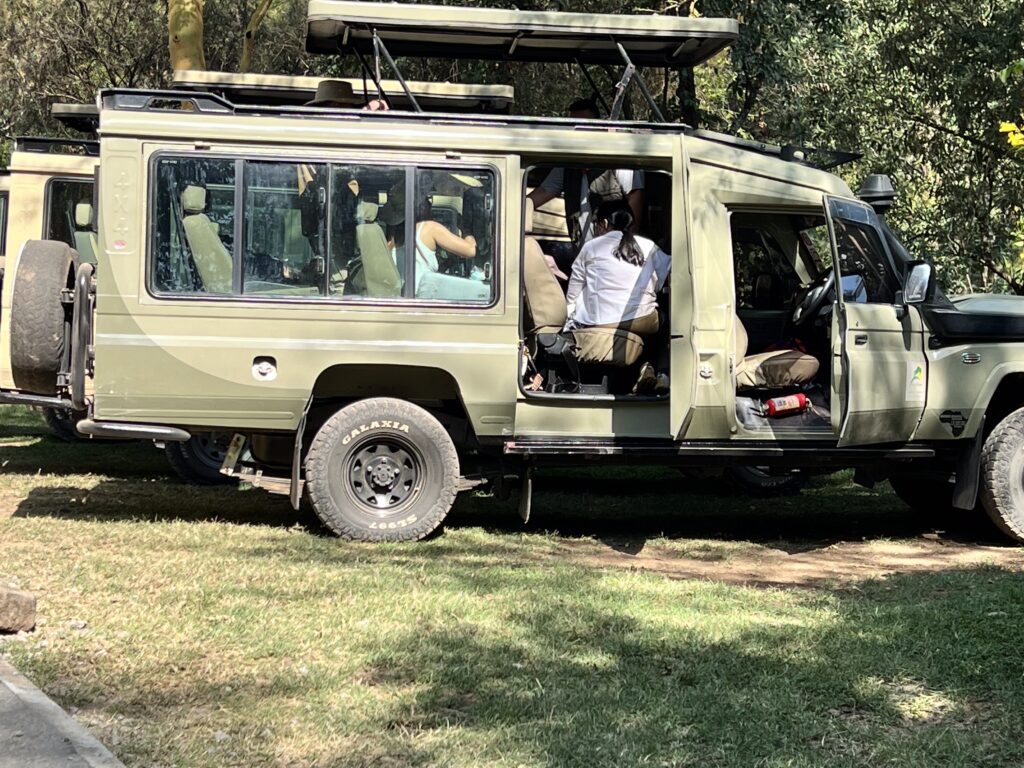
An experienced Kenyan safari driver can bring considerable local knowledge to your journey.
Our drivers understand Kenyan safari routes and have experience in the country’s major parks and destinations.
They can help guests:
- Understand their itinerary
- Navigate between destinations
- Understand local conditions
- Advise on practical route matters
- Assist with timing
- Conduct game drives where appropriate to the agreed arrangement
- Help guests make the most of their time in the parks
- Provide local knowledge about destinations and wildlife
The driver is also an English speaker in our arrangements.
However, there is an important distinction between a transport driver and a separately contracted professional safari guide.
If you require specialist guiding, extensive interpretation of wildlife behaviour, birding expertise, photography guiding or another specialist guiding service, you should establish that requirement before the safari.
Does a Transport-Only Driver Take You on Game Drives?
This is something you should clarify before booking.
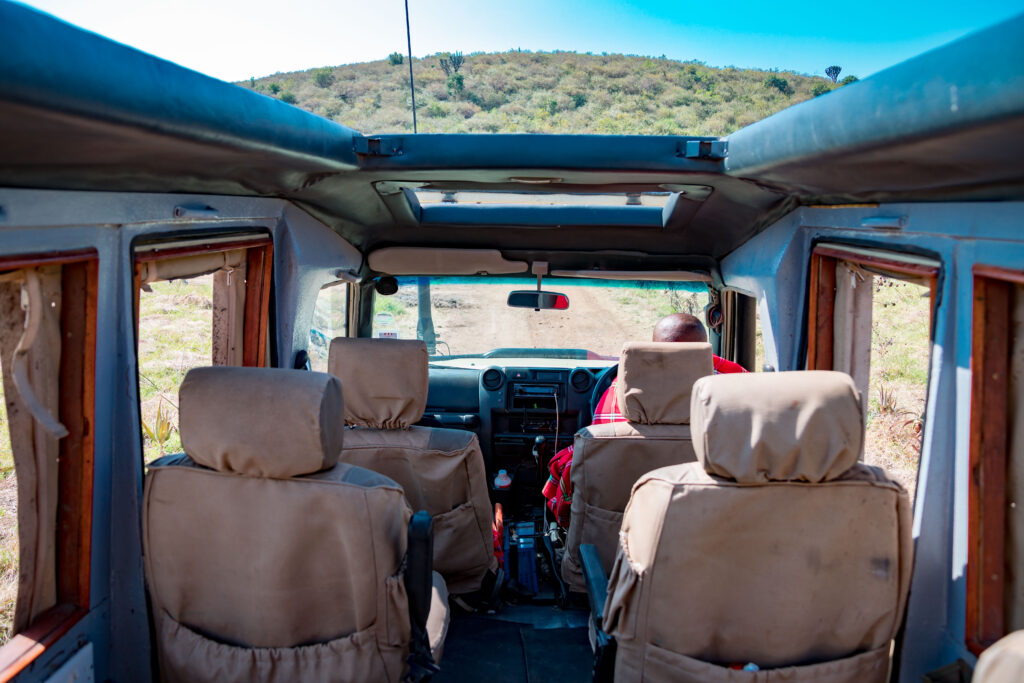
A transport-only driver can still have extensive knowledge of Kenya’s parks and may conduct game drives as part of the agreed transport arrangement.
In practice, the experience can involve much more than simply driving on a highway.
For example, once you enter a national park, the driver may navigate the park roads, help identify wildlife, advise on routes and positioning, and use their knowledge of the area to help guests enjoy their game-drive experience.
But do not make assumptions.
Ask exactly what your driver is contracted to provide.
If you want a specialist safari guide, agree on that separately

What Is NOT Included in Transport-Only Safari?
This is where you need to pay particular attention.
If you book your accommodation directly, your transport provider does not automatically become responsible for your lodge or camp reservation.
For example, you might independently book:
Nairobi → Lake Nakuru → Maasai Mara → Nairobi
while booking your accommodation directly with the properties.
Your transport company then provides the vehicle and driver according to the agreed itinerary.
The lodge is responsible for the accommodation service you booked with them.
This means you should keep your service vouchers with you.
Your accommodation voucher is important because it confirms what you have actually booked with the lodge or camp.
Before travelling, make sure you have the appropriate service vouchers for your accommodation and other pre-booked services
A Real Example: A Couple on a Transport-Only Safari
One of the best ways to understand this arrangement is to look at what actually happens on safari.
We currently have a couple travelling on a transport arrangement using one of our 4×4 safari vehicles.
They booked their accommodation directly.
Our responsibility is to provide the agreed transport arrangement, while their accommodation has been arranged separately.
So far, the experience demonstrates why having an experienced safari driver still matters even when the traveller has organised the accommodation independently.
On their first day at Lake Nakuru, they had already encountered two members of Africa’s Big Five:
- Black rhino
- Lion
The following day, in the Maasai Mara, they encountered:
- Elephant
- Lion
- Leopard
- Cheetah
That brought them very close to completing the traditional Big Five list during their safari.
There was no major logistical problem or emergency behind this experience.
And that is actually the point.
A successful transport-only safari should feel straightforward to the traveller.
The vehicle arrives as agreed. The driver understands the itinerary. The guests have their accommodation vouchers. Everyone knows what has been booked and who is responsible for each component.
Good preparation often means that problems never develop in the first place.

Why We Compare Notes Before Every Safari
One of the most important parts of a transport-only booking happens before the vehicle even leaves Nairobi.
We compare the itinerary and the agreed arrangement with the client.
This may sound simple, but it prevents many misunderstandings.
We want the traveller and transport provider to be on the same page regarding:
- Pickup arrangements
- Destinations
- Dates
- Vehicle type
- Driver arrangements
- Fuel
- Driver’s allowance
- Driver accommodation
- Applicable park fees
- Accommodation booked directly by the client
- Any special requirements
- What is and is not included
The objective is not complicated:
Everyone should know exactly what they have agreed to before departure
Transport-Only Doesn't Mean You Are Travelling Without Local Support
There is another misconception worth addressing.
Some travellers hear “transport-only” and assume that once they leave Nairobi, they are completely on their own.
That is not how we approach our service.
Our support system remains available while guests are travelling.
If a client needs assistance with an itinerary matter or encounters an unexpected situation, they can contact us.
We also understand that travel plans can change.
Safari itineraries sometimes need flexibility because of road conditions, timing, accommodation arrangements or the traveller’s preferences.
Where the client’s arrangements allow it, we try to remain flexible.
Why Experience Matters When Choosing Transport-Only Safari
A vehicle is only one part of the equation.
The person behind the wheel matters.
I have spent more than 15 years in the safari industry, and for me, this work has always been about more than transportation.
It is about the passion and eagerness to showcase my country.
Kenya has extraordinary landscapes, wildlife and people, and one of the most rewarding parts of safari work is helping visitors experience the country properly.
One of my personal favourite experiences is Amboseli in the morning, when Mount Kilimanjaro can appear beyond the park.
That view never becomes ordinary.
When you have spent years travelling Kenya’s safari routes, you develop an understanding of how different destinations feel, how the roads behave, how long journeys actually take and what guests can realistically expect.
That local knowledge has value.
Why the Vehicle Matters
A transport-only safari is not the time to discover that the vehicle you thought you were booking is not the vehicle that arrives.
Before paying, ask a very simple question:
“Is it a safari Land Cruiser or a safari van?”
Both have their place, but they are not the same vehicle.
If you specifically want a 4×4 safari Land Cruiser, have that clearly stated in your quotation or agreement.
At Vanvic Safari Transport, we believe in selecting well-maintained safari vehicles.
A safari vehicle spends long hours on the road and, in some destinations, on rough park tracks.
Vehicle condition therefore matters.
Our philosophy is straightforward:
Keep the vehicle in good condition and reduce the chances of trouble before the safari begins.
Preventive preparation is much better than trying to solve a vehicle problem in the middle of a safari.
The Biggest Mistake: Choosing the Cheapest Transport Without Checking Who You Are Paying
One issue I would strongly encourage travellers to watch for is the use of middlemen.
A cheap transport quotation can look attractive.
But travellers sometimes pay an intermediary before arriving in Kenya, only to discover that the transport provider they expected either does not appear or the vehicle is not what they had been promised.
This creates an extremely stressful situation.
Imagine arriving in Kenya with your accommodation booked, your safari itinerary planned and your family ready to travel—only to discover that the vehicle arrangement is not what you expected.
That is why I recommend verifying who you are dealing with and exactly what vehicle you have booked.
Should You Pay for Transport Before Arriving in Kenya?
For travellers arranging transport-only safaris, one practical approach is to consider payment on arrival after verification, where the supplier’s terms allow it.
The principle is simple:
Verify before you commit.
Confirm:
- The company
- The vehicle
- The vehicle type
- The driver
- The agreed itinerary
- The inclusions
- The pickup arrangements
If you have specifically booked a 4×4 safari Land Cruiser, make sure the vehicle you receive corresponds with what you agreed to.
This is particularly important when comparing unusually cheap quotations
What Should You Confirm Before Your Transport-Only Safari?
Before departure, I recommend having a written record of the following.
Your itinerary
Have the detailed itinerary clearly documented.
Vehicle
Confirm whether you are receiving:
- A 4×4 safari Land Cruiser
- A safari van
- Or another vehicle
Do not leave this ambiguous.
Driver
Confirm that a driver is included and understand the nature of the driver’s service.
Fuel
Ask whether fuel is included.
Driver’s allowance
Confirm whether the driver’s allowance is included.
Driver accommodation
Confirm how the driver’s accommodation is handled.
Park fees
Ask specifically which park fees are included and which fees remain payable by the guests.
Accommodation
If you booked accommodation directly, keep your accommodation/service vouchers readily available.
Support
Know who you contact if you encounter a problem during the safari.
These few checks can prevent significant confusion later.
Transport-Only Safari vs Fully Packaged Safari
The simplest way to understand the difference is this:
| Transport-Only Safari | Fully Packaged Safari |
|---|---|
|
Traveller arranges accommodation separately |
Safari operator arranges accommodation |
|
Transport provider supplies agreed vehicle |
Operator coordinates the complete safari |
|
Driver provides transport and agreed local assistance |
Safari package includes the services specified in the itinerary |
|
Accommodation may be booked directly |
Accommodation forms part of the package |
|
Responsibilities are divided between providers |
One operator normally coordinates the major components |
|
Traveller needs to understand what each supplier provides |
Package itinerary normally specifies the included components |
Neither arrangement should be treated casually.
The important thing is knowing exactly what you have purchased.
When Does Transport-Only Make Sense?
Transport-only can be particularly useful for travellers who want more control over their safari.
For example, you may already know where you want to stay and prefer to book your own lodges and camps.
You may have found a particular property you want to stay at.
You may also prefer to arrange different parts of your trip directly.
In that situation, professional safari transport allows you to combine your independently booked accommodation with a dedicated vehicle and experienced driver.
You retain control over the accommodation while having professional transport for the journey.
The Questions You Should Ask Before Booking
Before confirming your transport-only safari, ask the supplier:
1. What vehicle will I receive?
Do not simply accept “safari vehicle.”
Ask whether it is a Land Cruiser, safari van or another vehicle.
2. Is fuel included?
Get the answer in writing.
3. Is the driver's allowance included?
Clarify this before departure.
4. Is the driver's accommodation included?
Especially important on multi-day safaris.
5. Which park fees are included?
Ask specifically rather than assuming.
6. Who is responsible for my accommodation?
If you booked directly, keep your service vouchers.
7. What exactly will the driver do?
Understand whether your arrangement includes game drives and local assistance.
8. Who do I contact if there is a problem?
Make sure you have a working support contact.
9. Is the vehicle actually available for my dates?
This is especially important when dealing with intermediaries.
10. What happens if the itinerary changes?
Understand the flexibility of the arrangement before departure.
The Most Important Lesson: Agree First, Travel Second
After many years in the safari business, one lesson remains particularly important:
Most misunderstandings can be prevented by having a clear conversation before departure.
Do not wait until you arrive in Kenya to discover what your transport quotation means.
Compare the itinerary.
Compare the inclusions.
Confirm the vehicle.
Confirm the driver arrangements.
Confirm the park fees.
Keep your accommodation vouchers.
And make sure you know exactly who is responsible for each part of the trip.
That is how a transport-only safari should work.
Final Advice for Your First Transport-Only Safari in Kenya
If this is your first transport-only safari, my advice is simple:
Do not choose your transport provider based on price alone.
First verify what you are getting.
If you have agreed on a 4×4 safari Land Cruiser, make sure that is what you receive.
If fuel, driver’s allowance and applicable vehicle/driver park fees are included, have that confirmed.
If you booked your accommodation directly, make sure you have your service vouchers.
And where the supplier’s terms permit it, consider payment on arrival after verifying the vehicle and the agreed arrangement rather than sending money to an unknown middleman simply because their quotation is cheaper.
A safari is a significant investment.
The transport vehicle is the platform from which you experience much of Kenya’s wilderness.
Choose it carefully.
Transport-Only Safari with Vanvic Safari Transport
At Vanvic Safari Transport, our approach is built around reliable safari vehicles, experienced drivers, clear communication and local knowledge.
We understand that not every traveller wants a fully packaged safari.
Some guests have already chosen their camps and lodges and simply need dependable safari transport to connect everything together.
That is where transport-only arrangements can work extremely well.
From the roads of the Maasai Mara to the early-morning views of Mount Kilimanjaro in Amboseli, our objective is straightforward:
Provide the right vehicle, an experienced driver, clear expectations and dependable support—so you can concentrate on enjoying Kenya.
If you are arranging your accommodation independently but need reliable 4×4 safari transport in Kenya, make sure you discuss the complete itinerary and inclusions with your transport provider before confirming your booking.


